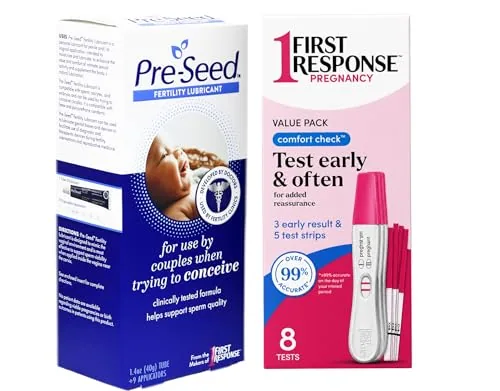
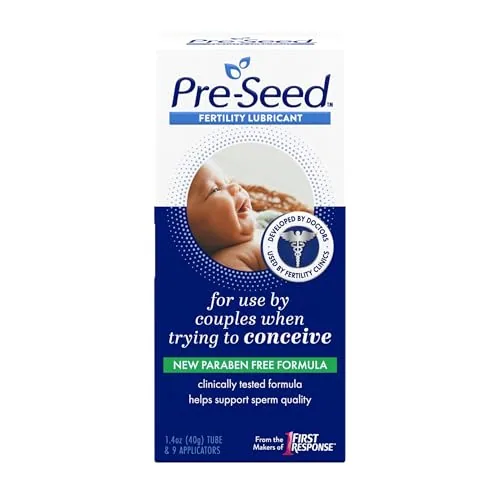
Pre-Seed
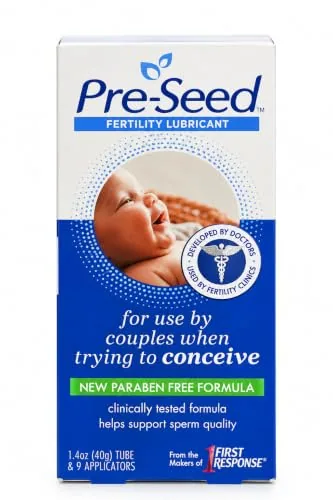
Pre-Seed Fertility Lubricant, 9 Applicators
- Fertility-friendly
- Isotonic, pH balanced
- Prefilled applicators
Fertility-friendly lube is made to be compatible with sperm for couples trying to conceive, and here is what the research actually says.
No product matches every filter.
Most lubricants are not designed with sperm in mind. A fertility-friendly lubricant, also called sperm-friendly lubricant, is made and tested to be compatible with sperm, eggs and embryos. The FDA has a dedicated category for it: product code PEB, a Class II device that requires 510(k) clearance. Its 10 clearances span 2006 to 2022, starting with PRE' Vaginal Lubricant.
Lab results are mixed. In one in-vitro study, Pre-Seed kept sperm motility (progressive motility) at about 86 percent, while other lubricants lowered it. Yet in a cohort of 6,467 women, lubricant use was not linked to reduced fecundability, with ratios around 1.0 or above for every type. Lab effects do not always show up in real life.
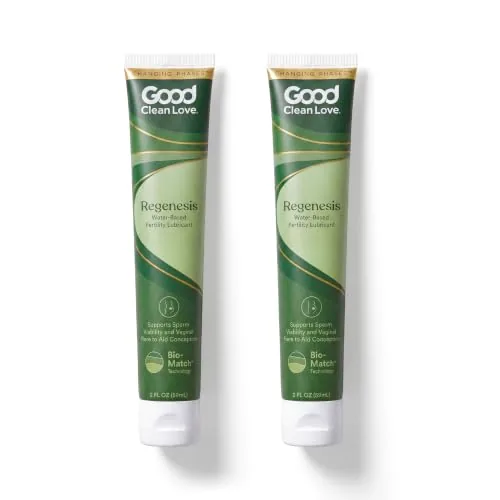
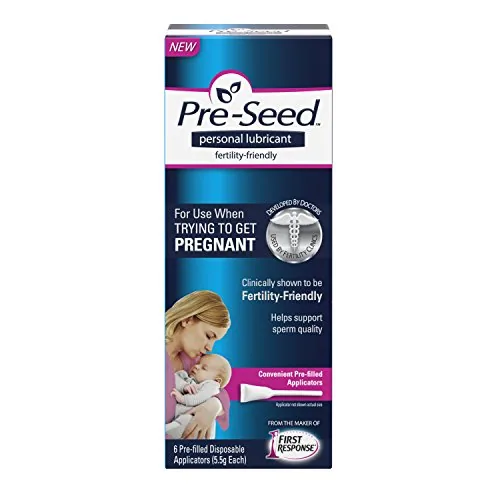
If you are trying to conceive (TTC), a fertility-friendly formula is a reasonable precaution; talk to a clinician if you have been trying for a while. See our fertility guide and best fertility-friendly lubes. Pre-Seed and Good Clean Love both make fertility-friendly formulas.
| Lubricant type | Fecundability ratio | Reading |
|---|---|---|
| Water-based, not pH-balanced | 1.02 | ~ No reduction |
| Fertility-friendly | 1.01 | ~ No reduction |
| Oil-based | 1.23 | ~ No reduction |
| Silicone | 1.27 | ~ No reduction |
Source: McInerney et al., BJOG, 2018. All confidence intervals cross 1.
Some lubricants reduce sperm motility in lab tests, but a large cohort found no link between lubricant use and time to pregnancy.
Product code PEB, for lubricants compatible with sperm, oocytes and embryos and usable by couples trying to conceive.
Choose a lubricant that is FDA cleared in the fertility-friendly category (product code PEB), such as Pre-Seed, and avoid oils and silicone while trying to conceive unless a clinician advises otherwise.
A clinician can advise on how long to try before testing, which depends on age and history.
The cohort showed no reduced fecundability for these, but fertility-friendly products are the cautious choice.